What is a CNC Engraving Machine?
2026-01-15
Last time, we introduced how to program a CNC engraving machine (G-code). For users new to this equipment, understanding "what is a CNC engraving machine" and its core advantages is the first step to correct selection and efficient application. This time, we'll guide you through understanding CNC engraving machines.
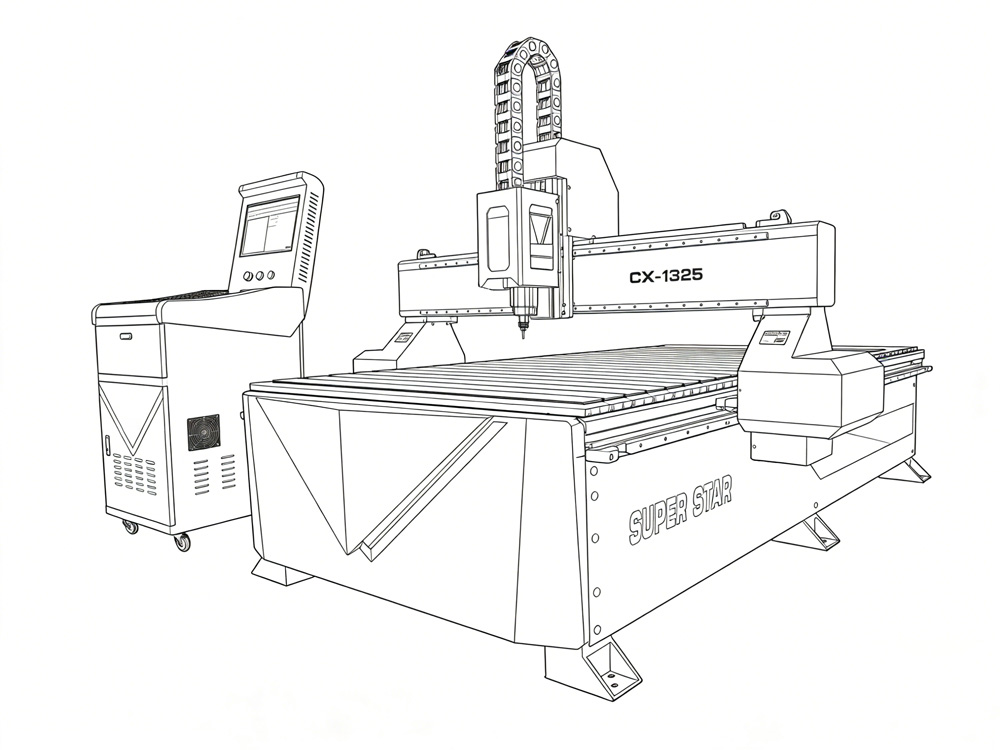
A CNC engraving machine is an automated device that uses a Computer Numerical Control (CNC) system to control the movement trajectory of the cutting tool, performing engraving, cutting, hollowing, and milling operations on materials. The operator only needs to complete the graphic design and generate the machining program on the computer, and the machine can then perform high-precision machining according to the preset path.
Compared to traditional manual engraving, CNC engraving machines have significant advantages such as high precision, good repeatability, stable efficiency, and low reliance on manual labor, and are widely used in standardized and mass production scenarios.
The basic workflow of a CNC engraving machine mainly includes the following steps:
1. Drawing Design: Graphic or model design is completed using CAD/CAM software.
2. Program Generation: The design file is converted into CNC instructions such as G-code.
3. System Control: The CNC control system parses the instructions and controls the motor operation.
4. Automatic Machining: The spindle drives the cutting tool to perform precision engraving or cutting on the workpiece.
The entire machining process is highly automated, and the machining accuracy can be controlled at the millimeter or even micrometer level.
Depending on the equipment configuration and spindle power, CNC engraving machines can process a variety of materials, including but not limited to:
* Wood: Solid wood, MDF, plywood
* Plastics: Acrylic, PVC, ABS
* Metals: Aluminum, copper
* Stone: Marble, artificial stone, bluestone
* Composite Materials: Carbon fiber sheet, aluminum composite panel
This is also an important reason why CNC engraving machines are widely used in many industries.
Currently, CNC engraving machines are widely used in the following industries:
* Woodworking and Furniture Industry: Cabinet door engraving, panel furniture processing
* Advertising and Signage Industry: Acrylic letters, PVC letters, signs
* Mold Manufacturing: Foam molds, wooden molds, aluminum molds
* Stone Industry: Background wall, relief, tombstone processing
* Crafts and Custom Processing: Personalized pattern engraving
Compared with traditional processing equipment, CNC engraving machines have significant advantages:
* High processing precision and strong product consistency
* High degree of automation, reducing labor costs
* High processing speed, improving production efficiency
* Supports complex graphics and 3D engraving
* Suitable for small-batch customization and mass production
When selecting a CNC engraving machine, it is recommended to focus on the following factors:
* Type and thickness of the material being processed
* Spindle power and speed
* Table size
* Control system stability
* Whether it supports automatic tool change (ATC)
* After-sales service and technical support capabilities
In general, CNC engraving machines are essential tools in modern manufacturing for achieving high-precision, high-efficiency, and intelligent processing. Choosing the right CNC engraving machine can significantly improve product quality and market competitiveness.
If you are interested in or planning to purchase a CNC engraving machine, please feel free to contact us. I will answer your questions.
What is a CNC Engraving Machine?
Working Principle of CNC Engraving Machines
What Materials Can CNC Engraving Machines Process?
Main Application Areas of CNC Engraving Machines
Core Advantages of CNC Engraving Machines
How to Choose the Right CNC Engraving Machine?
Conclusion