What Is an ATC CNC Router?
2026-04-27
Introduction
An ATC CNC router (Automatic Tool Changer Computer Numerical Control router) is an advanced computer-controlled cutting machine designed for automated, multi-tool machining. Unlike standard CNC routers that require manual tool changes (3–5 minutes per change), an ATC CNC router automatically swaps tools between operations in 5–12 seconds, eliminating downtime and human error. This automation makes it a core asset for high-efficiency production in woodworking, cabinet making, sign manufacturing, and industrial fabrication.
What Is an ATC CNC Router?
At its core, an ATC CNC router integrates a CNC control system with a dedicated Automatic Tool Changer (ATC) unit. It stores multiple tools (typically 8–24, including end mills, drill bits, and engraving bits) in a magazine, then selects and installs the right tool per G-code instructions—no manual intervention needed.Key components of an ATC CNC router:
· Tool Magazine: Linear or carousel-style storage for 8–24 tools;
· ATC Mechanism: Pneumatic or servo-driven arm to pick/place tools;
· ATC Spindle: ISO30/BT30 spindle holder for fast, precise tool locking;
· CNC Controller: Executes G-code to trigger automatic tool changes
How Does an ATC CNC Router Work?
The ATC workflow is fully automated and follows 4 key steps:
1.Program Loading: Operators upload a G-code program with pre-defined tool sequences;
2.Tool Selection: The CNC controller reads the program and sends a signal to the ATC magazine;
3.Automatic Change: The ATC arm retrieves the target tool, swaps it with the current one, and locks it in the spindle (5–12 seconds);
4.Machining Resumes: The machine restarts cutting without pausing, repeating the cycle for multi-tool jobs.
Key Benefits of ATC CNC Routers
1. 35–50% Higher Production Efficiency
Manual tool changes take 3–5 minutes per swap; ATC cuts this to seconds. For a cabinet door job requiring 4 tools, ATC saves 12–20 minutes per unit—boosting daily output by 35%+.
2. Ultra-High Precision & Consistency
Automatic tool calibration eliminates human error (e.g., debris in collets, incorrect Z-zero). ATC routers maintain ±0.01mm accuracy for wood, plastic, and aluminum, ensuring uniform quality across batches.
3. Reduced Labor Costs & Downtime
Operators only load materials—no constant monitoring or tool changes. This cuts labor time by 40% and reduces unplanned downtime by 60% vs. manual CNC routers.
4. Versatility for Complex, Multi-Tool Jobs
ATC routers handle 4–24 tool operations in one setup: cutting, profiling, drilling, engraving, and 3D carving. Ideal for nested furniture, custom cabinets, and intricate signage.
Common Types of ATC CNC Routers
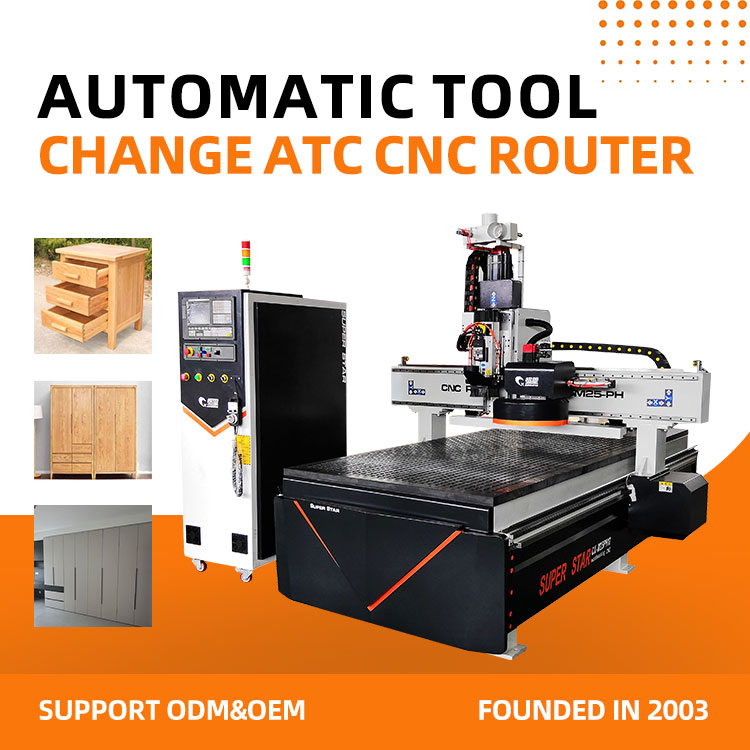
1.Carousel (Disc) ATC CNC Router
Circular magazine near the spindle; fast tool changes (5–8 seconds); ideal for high-speed mass production.
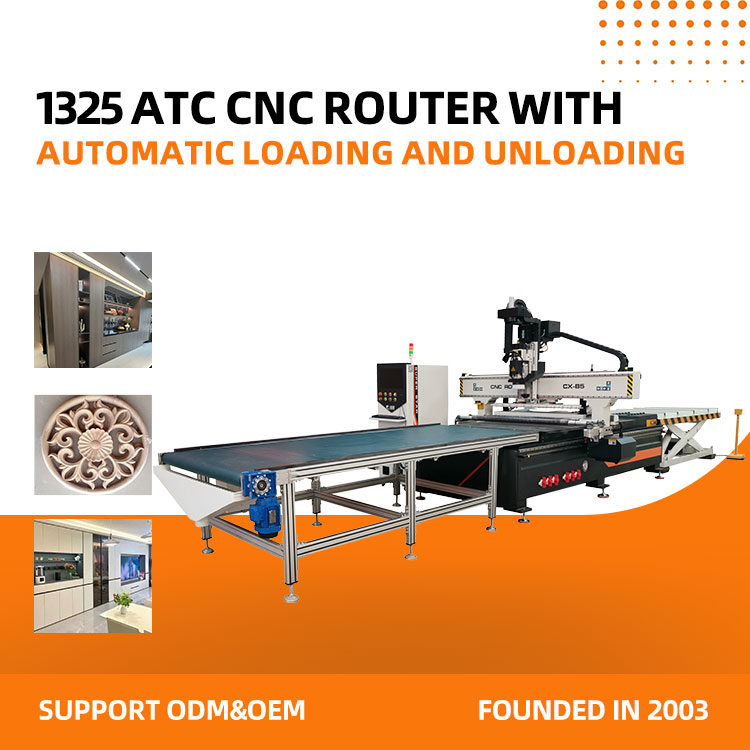
2.Linear ATC CNC Router
Straight-line tool storage; holds 12–24 tools; better for large workpieces and complex 3D jobs.
3. 3-Axis vs. 5-Axis ATC CNC Router
3-Axis: X/Y/Z movement; perfect for 2D/2.5D woodworking (cabinets, doors);
5-Axis: Adds A/B rotation; handles complex 3D molds, aerospace parts, and stone carving.
Top Industrial Applications of ATC CNC Routers
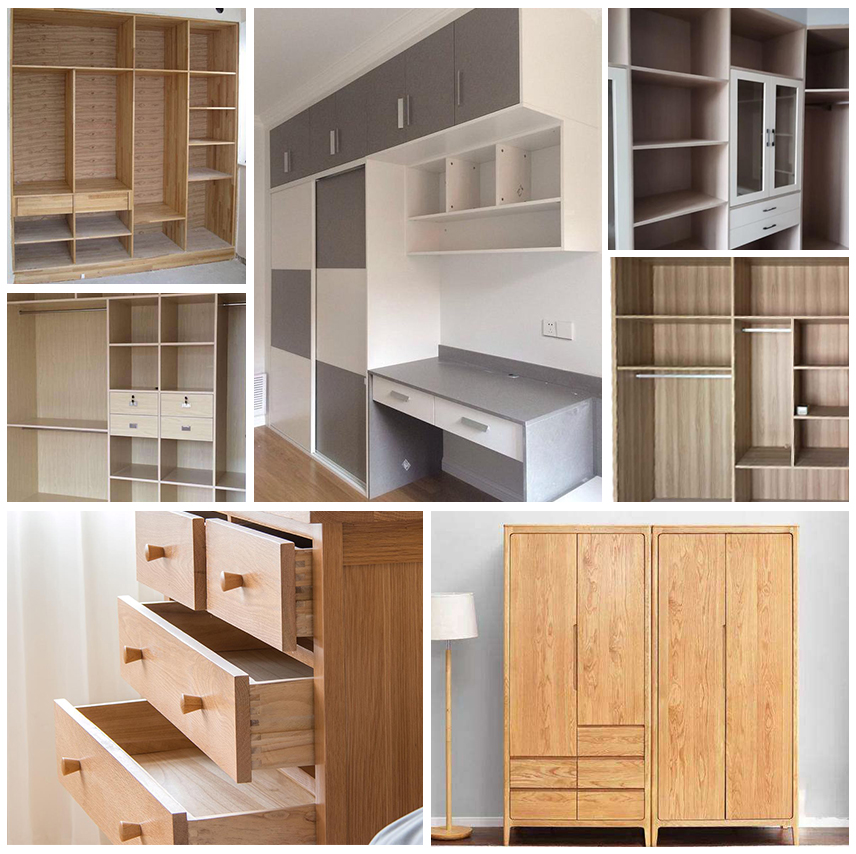
· Furniture & Cabinet Making: Nested cabinets, custom doors, and panel furniture (most common use case);
· Sign & Advertising: 3D acrylic signs, metal lettering, and engraved plaques;
· Woodworking & Joinery: Solid wood carving, furniture components, and musical instruments;
· Plastic & Aluminum Fabrication: Precision parts, enclosures, and decorative panels;
· Mold Making: Wood/aluminum molds for casting and thermoforming.
ATC CNC Router vs. Manual CNC Router: Key Differences
|
Feature |
Manual CNC Router |
ATC CNC Router |
|
Tool Change Time |
3–5 minutes |
5–12 seconds |
|
Operator Involvement |
High (constant monitoring) |
Low (load materials only) |
|
Human Error Risk |
High |
Low (sensor-verified tool length) |
|
Ideal Jobs |
Single-tool, low-volume |
Multi-tool, mass production |
|
Cost |
Lower upfront |
Higher upfront, lower long-term |
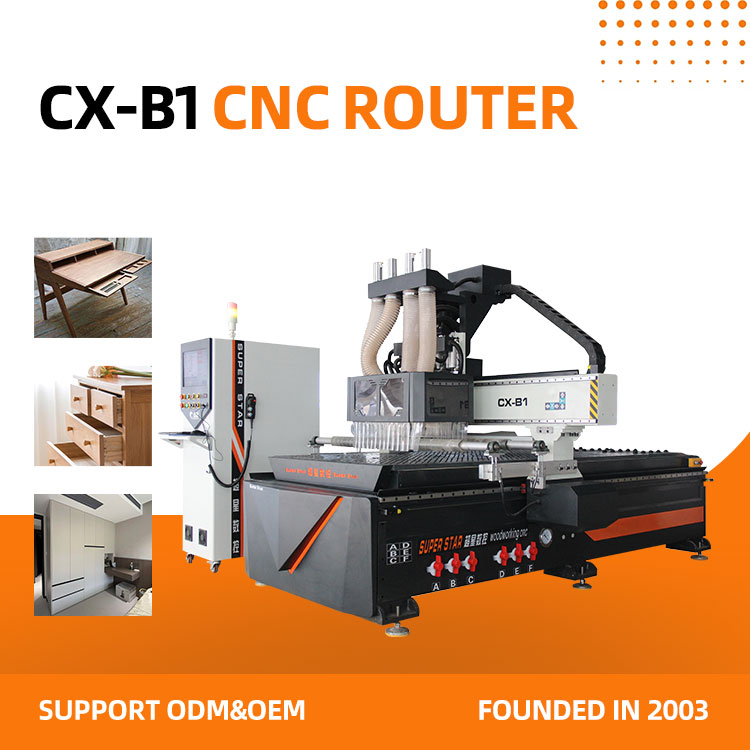
ATC CNC Router VS. 4-Process CNC Router(CX-B1)
A 4-process router uses 4 fixed spindles (no tool changing), while ATC uses one spindle with a tool magazine.
· 4-Process: Lower cost, simpler maintenance, slower tool switching;
· ATC: Faster change, more tools (8–24), better for continuous production.
How to Choose the Right ATC CNC Router (Buying Guide)
1. Tool Magazine Capacity: 8–12 tools for small workshops; 16–24 for mass production;
2. Spindle Power: 6–9kW for wood/plastic; 11kW+ for aluminum/heavy materials;
3. Working Area: 1325 (1300×2500mm) for standard panels; 1530 for large furniture;
4. Control System: DSP or Syntec for user-friendly operation; advanced CNC for 5-axis jobs;
5. Automation Add-Ons: Auto-loading/unloading systems for unmanned production.
Conclusion
An ATC CNC router is the ultimate solution for businesses seeking to scale production, boost precision, and cut labor costs. By automating tool changes in seconds, it transforms multi-tool jobs from time-consuming bottlenecks into efficient, high-output processes. Whether you run a small cabinet shop or a large manufacturing plant, investing in an ATC CNC router delivers a clear ROI—with 35%+ efficiency gains and consistent, high-quality results.
Ready to upgrade your CNC workflow? Contact us today for a free consultation and customized ATC CNC router solution tailored to your production needs.